
Oct 17 - Nov 21 2026
ATOPOS cvc
Polydeukous 41A, 185 31 Piraeus
Opening 17/10, 18:00-20:00
Days & Hours:
Every Saturday 12:00-22:00.
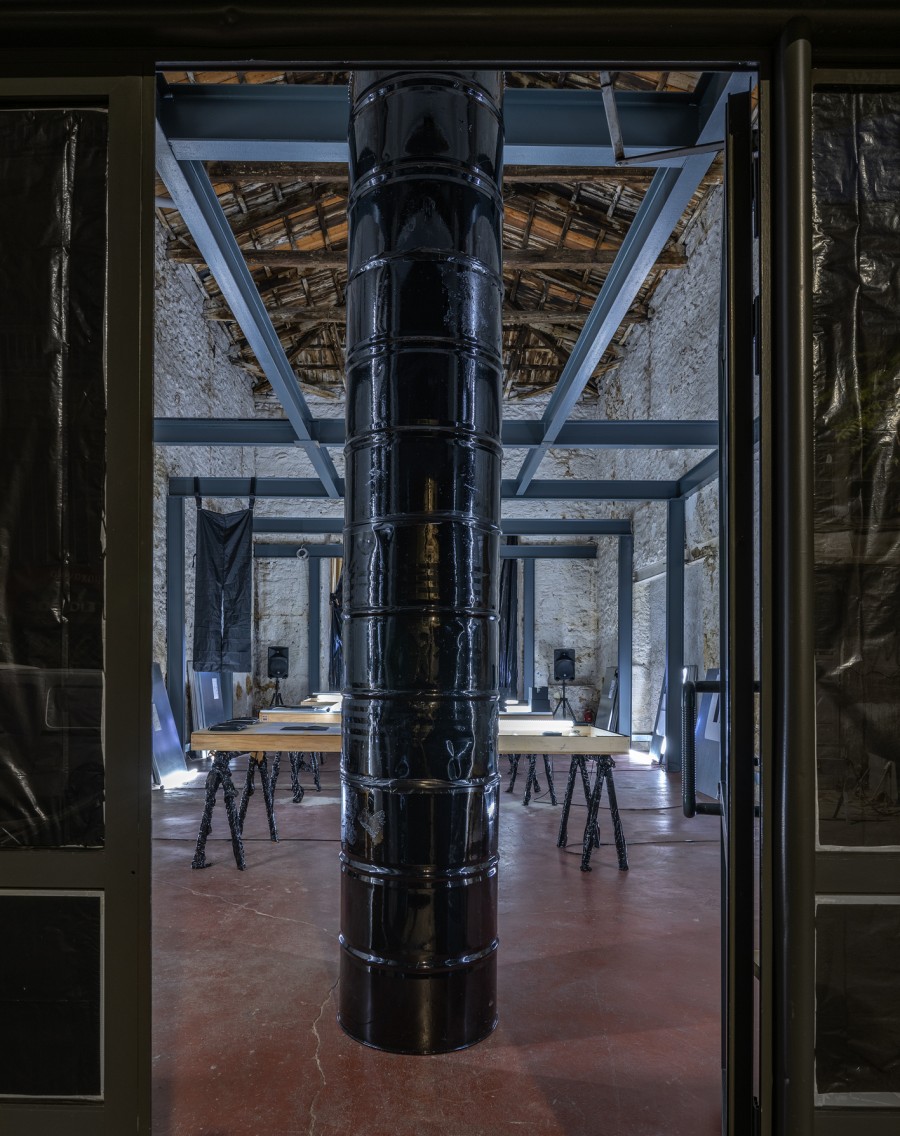
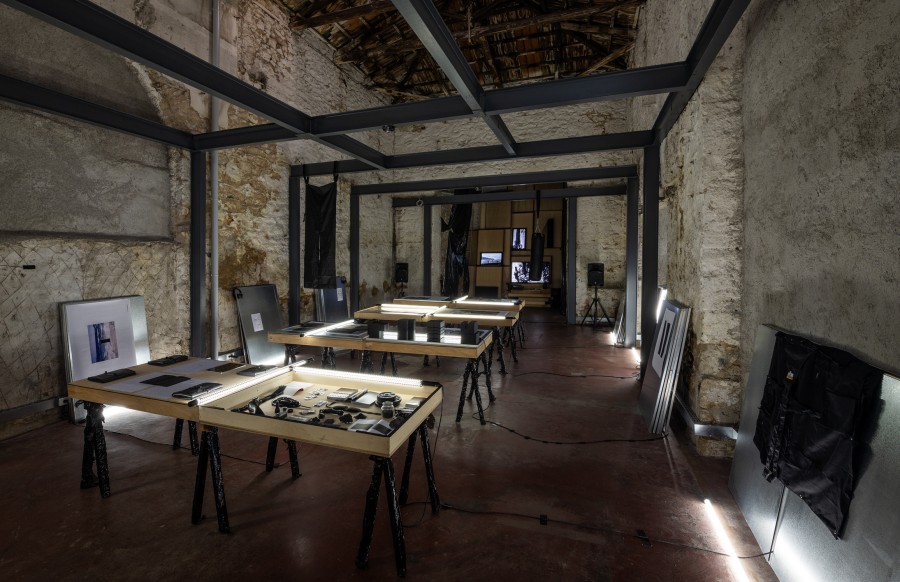
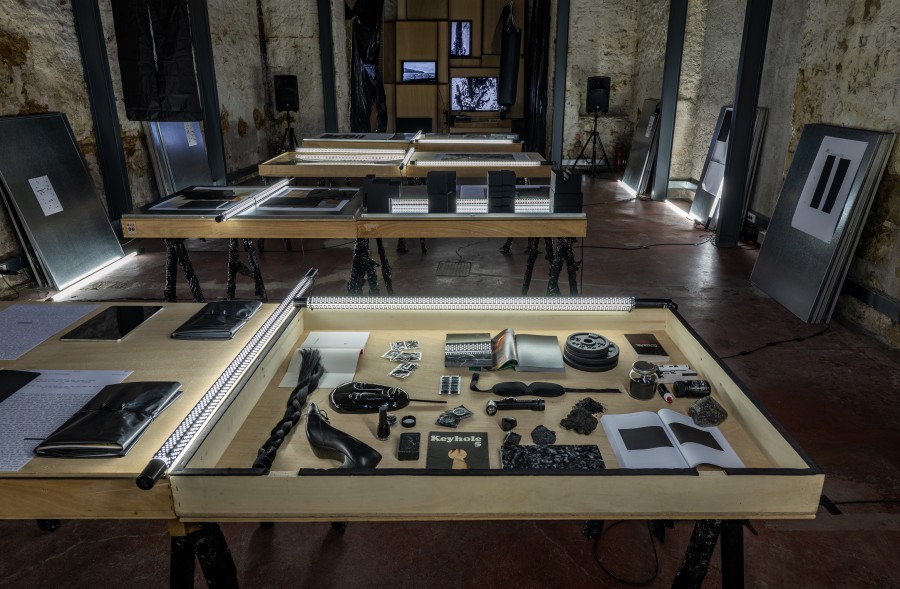
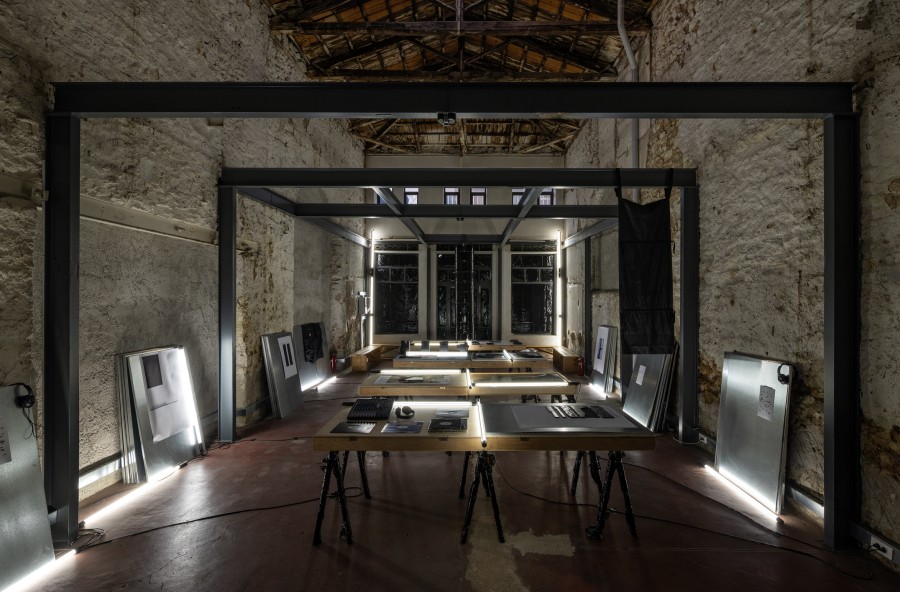
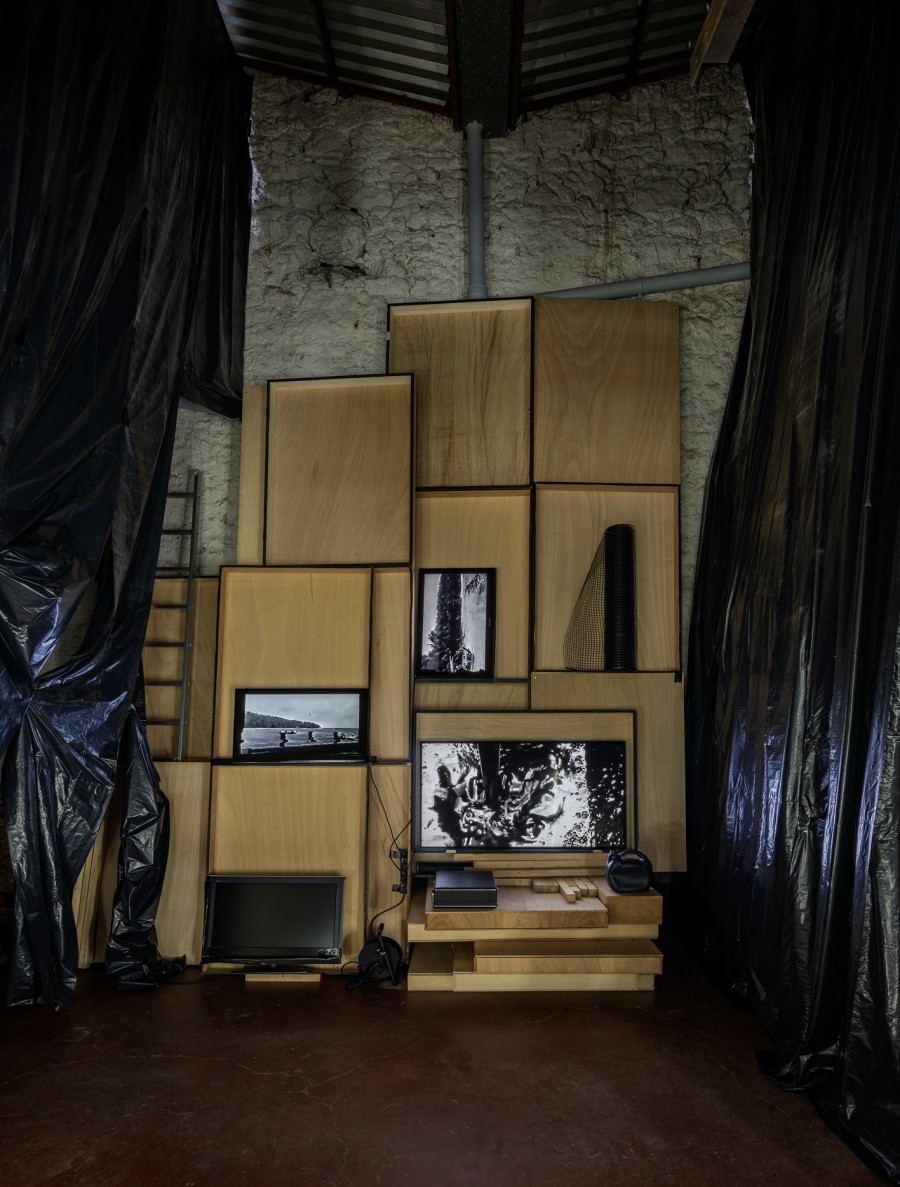
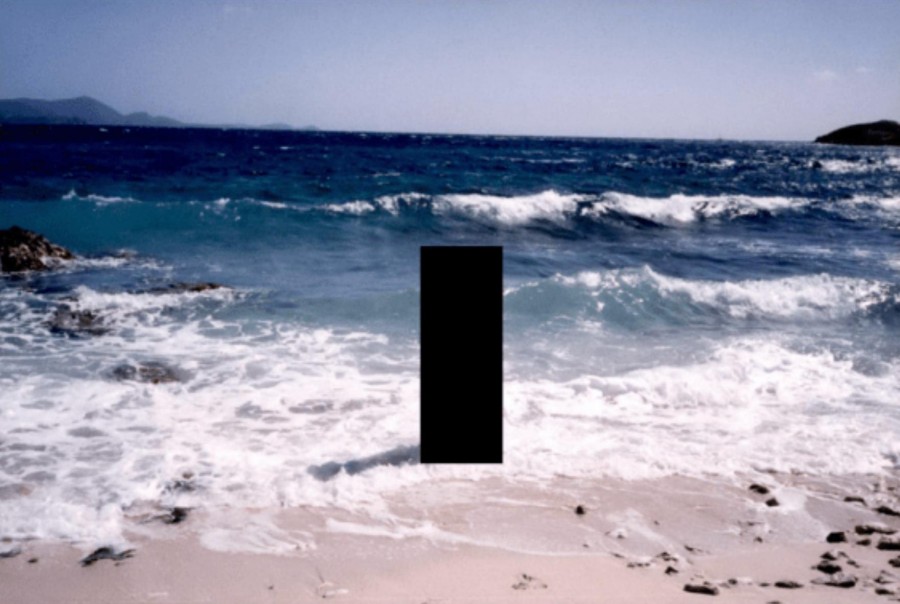
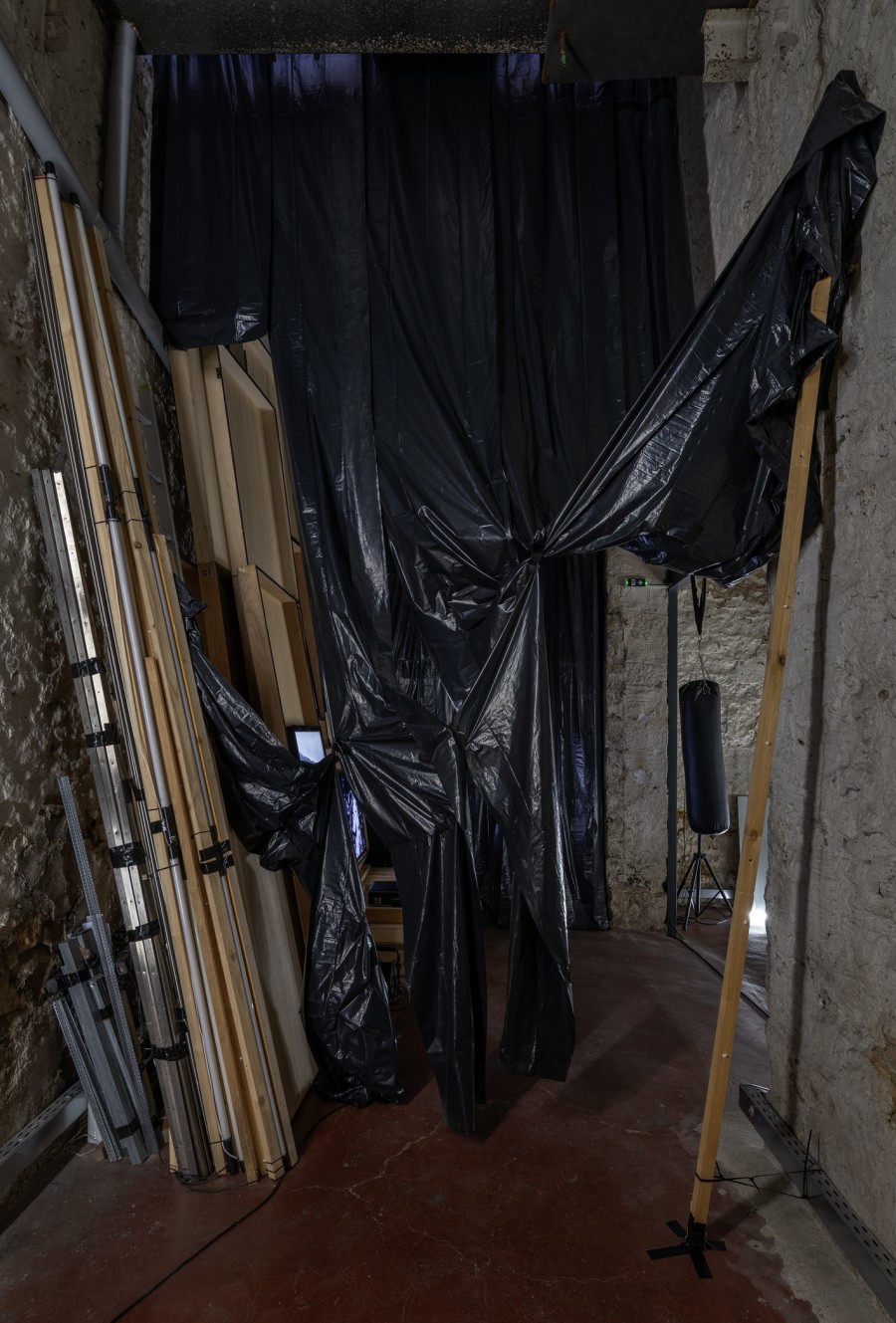

On October 17, 2026 from 18:00 to 22:00, ATOPOS cvc opens Who Owns the Blackest Black by Em Kei at its exhibition space in Piraeus, 41A Polydefkous Street. The exhibition is co-curated by ATOPOS cvc Artistic Director Vassilis Zidianakis and the artist. It forms part of Affective Archives and will run until November 21, 2026.
WHO OWNS THE BLACKEST BLACK WEBSITE
The artist explores the relationship between power, the control of information and the construction of reality through black as color, material, concept and a field of multiple cultural, historical and political readings. Drawing on a broad range of interpretations of black, Em Kei creates a “black archive”, a peculiar Wikipedia comprising a wide range of media, including books, videos, models, sound works and black ready-made objects, among others.
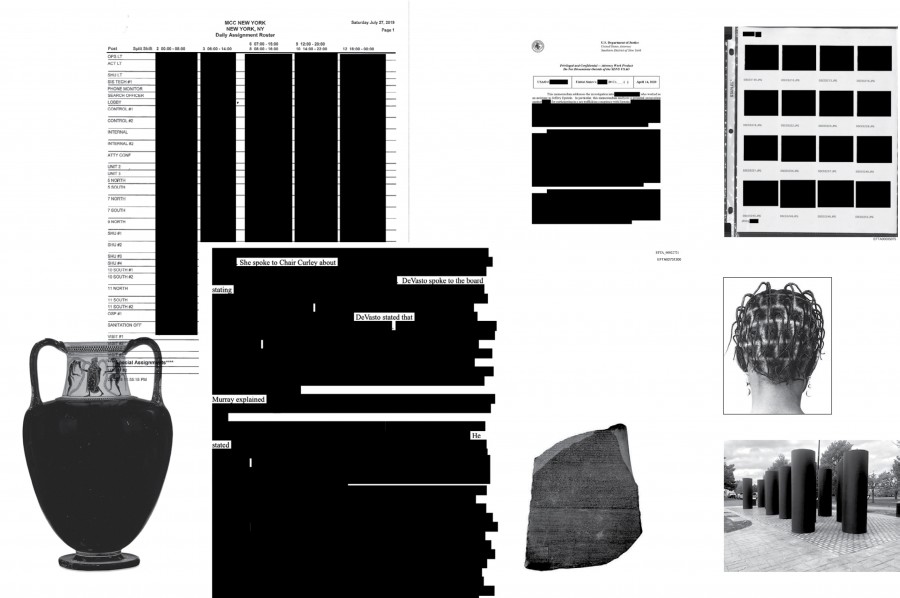
The archive includes recently declassified US government documents, including the JFK and Epstein files. It does not, however, attempt to offer a linear or comprehensive narrative. Instead, it operates as a system of connections in which seemingly unrelated historical events and occurrences coexist, prompting subjective associations and new readings. Here, black functions as color, shadow, politics, sound, system or illusion.
The selection, classification and accessibility of information thus become tools that shape the way we perceive and construct reality. Through her research-based approach, the artist creates a space in which the archive ceases to be a neutral repository of knowledge and becomes a field of negotiation: which data are preserved, which are excluded, who decides what is worth recording, and how do the information that surrounds us shape our perceptions?
Visitors are invited to move through this dense network of references and discover their own connections, contributing to archival art as a means of exploring alternative narratives. Once again, through its exhibition program, ATOPOS cvc seeks to shift the focus from the archive as a source to the archive as a subject. Who Owns the Blackest Black is accompanied by an extensive public program that invites architects, DJs, ceramicists, curators and other researchers to present their practices through different points of engagement with the black archive.
Em Kei is an interdisciplinary visual artist working with objects, images, materials and historical data, creating works that connect the personal with the political and function as sites of social observation. She lives and works between Athens and the United Kingdom. She has participated in international exhibitions and artistic projects, while also working in graphic design and producing publications and visual materials for arts and cultural organisations.
Useful information:
Address: ATOPOS cvc, 41A Polydefkous Street, Piraeus
Opening: Saturday October 17, 2026, 18:00–22:00
Exhibition hours: Every Saturday from October 24 to November 21, 12:00–20:00. On Saturday October 31, the exhibition will open at 20:00 and by appointment.
Read below the public program of the exhibition.
November
Who Owns the Blackest Book (Part II)
Saturday, November 7, 2026
State, Apostolos Zerdevas
Saturday, November 7, 19:00-21:00
English
A presentation of the photobook State, created by Em Kei and Apostolos Zerdevas. State is based on videos recorded in Iraq and Syria between 2007 and 2014 by the Islamic State and its predecessor organizations. Through their photographic reworking, the material is transformed into a new visual narrative that traces the history and development of the group’s visual iconography, while documenting its transformation from a terrorist organization into a governing entity.
Apostolos Zerdevas studied photography at Focus School of Photography and Fine Arts at Chelsea College. He has participated in and curated exhibitions in Greece and abroad. Since 2012, he has served as Director of Studies at Focus School of Photography. He has collaborated with the Athens Photo Festival and is a founding member of Tilt Platform.
Who Owns the Blackest Blast: The Geology of Black
Saturday, 7 November, 20:00
Yiorgos Psychas
English
The landscape, volcanic everyday life, and the kiln are approached as fields of material transformation of memory. At the core of Yiorgos Psychas ceramic practice lies an exploration of organic and inorganic life as an ongoing process of evolution, adaptation and mutation. At the same time, he examines the condition of waiting and the notion of error as a possibility, a disruption, and a catalyst for new transformations and unpredictable outcomes. Black serves as a point of reference for these “alchemical” processes and as the material ground for successive experiments and transformations.
Yiorgos Psychas is a ceramicist and founder of Emk. He teaches introductory ceramics and ceramic technology, while also producing work and collaborating as a technical consultant. He graduated from the Landscape Architecture and Urban Design programme at the University of Copenhagen. In Iceland, he works on natural landscape restoration projects.
Who Owns the Blackest Barcode
something something
Saturday, November 14, 19:00
English
A collective reading by the curatorial team of something something, exploring the unseen structures of fashion through garments, slow supply processes and distribution routes. Drawing on research from the 2026 State of Available to Promise: Hidden Systems, Shared Futures. something something invites audiences to reflect on the often-invisible systems, processes and relationships that shape how clothing is produced, transported and circulated.
something something is a curatorial collective founded by Anne Zhou, Anouchka van Driel and Shanu Walpita, working across fashion, design, art and cultural research. Bringing together practices in curating, exhibition-making, publishing and public programming, the collective explores the social, cultural and material systems that shape how things are made, circulated, and experienced. The three collaborated as co-curators of the 2026 State of Fashion Biennale, Available to Promise: Hidden Systems, Shared Futures, in Arnhem, the Netherlands.
The Urbanism of Light: The Inner Courtyard as a Site of Social Negotiation
Manolis Iliakis
Saturday, November 21, 19:00
Greek
The lecture examines the history of the city’s interior void through the relationship between light and darkness and its connection to habitation and social stratification. It takes Berlin as its starting point, tracing the transition from the densely populated nineteenth-century Mietskasernen and their dark inner courtyards (Hinterhöfe), associated with problems of lighting, ventilation and sanitation, to the interventions of the 1987 IBA and the emergence of the Lichthof (light-filled inner courtyard). This transition concerns not only architectural form, but also the right to access light, air, greenery and quality space.
The same perspective is applied to the Athenian apartment building, where vertical organisation often reflects social hierarchies through the different relationships that ground floors, intermediate floors and penthouses have with light, air, views and public space. At the same time, the inner courtyard functions as an intermediary space between the private and the communal, the light and the dark. Taking the exhibition as its point of departure, the lecture asks: what does it mean to “own” light or darkness, and how do living conditions reveal social inequalities and power relations?
Manolis Iliakis is an architect and spatial designer, and co-founder of the architecture and design office Yolkstudio. He is the Interior Design Pathway Leader at Vakalo College. He has taught and collaborated with academic institutions in Greece and abroad, including the IUAV University of Venice, the École Nationale Supérieure d’Architecture de Montpellier, and the Bauhaus-Universität Weimar, where he has been a Visiting Professor since 2021.He has authored numerous articles on architecture, published by academic institutions, scholarly journals and publishing houses, including publications by the École Nationale Supérieure d’Architecture de Montpellier and Electa publications.
the unknowable black
Nadja Argyropoulou
Saturday, November 21, 20:00
Greek
An errant move within the dominion of the unknowable black.
Vigils, riots, corners, silence, noise, blocks, holes, strike, refusal, humor, time, μπλεμαύρηθολότητα.
I don’t say anything.
Nadja Argyropoulou attempts a performative response from/to Em Kei’s archive-web.
Nadja Argyropoulou is an independent curator and art historian. She is most interested in practices of solidarity among artistic, social and environmental initiatives, in countercultural, ignored or suppressed forms of expression, in queer anarchisms and forms of critical fabulation, in emerging & submerging forms of subversion and defiance within the sociocultural field.
Un-dress: A Sacrificial Holocaust
Em Kei
Saturday, November 21
Performance
October
Who Owns the Blackest Book (Part A)
Who Owns the Blackest Black, Em Kei
The Black Shelf, Tristan Bera
Saturday, October 24, 18:00-20:00
English
Em Kei will present the book Who Owns the Blackest Black, which forms the central core of the exhibition. It is an extensive collection of images and information gathered from books and the internet, all connected through the color black. Censored documents, artworks, photographs, book pages, newspaper clippings and published photographs of the interiors of Epstein’s residences come together to form a corpus that explores the mechanisms through which knowledge is constructed and perceived, altering the way a book is read.
Tristan Bera will present his text The Black Shelf, which revisits an earlier research project centered on “black books” and developed through an expanding web of literary, political, sexual and cinematic references. The attempt to exhaust a bibliography eventually took the form of a series of experiments. The text explores the production of knowledge and the point at which a bibliography takes on a life of its own. Tristan Bera is a writer and curator working across independent research, social practice and filmmaking.
Who Owns the Blackest Beat
CERB, Thodoris Dimitropoulos, Choronzon
Saturday, October 31–Sunday, November 1, 20:00–02:00
ATOPOS cvc welcomes CERB, Thodoris Dimitropoulos, Choronzon (Lee Adams) for a themed party.
CERB will present his record collection through vinyl, publications and underground hip-hop tracks that have challenged censorship, exploring what is considered “forbidden” and how artists maintain their independence. A DJ and collector with a focus on hip-hop, electronic music and jazz, CERB has participated in self-organised parties and music events. For the past six years, he has hosted the Heavy Rotation radio show on Paranoise Radio, while also working in music production and experimenting with samplers and synthesisers.
A DJ set built around a simple visual constraint: records with black covers. Selected tracks from a collection, brought together through a shared visual element rather than genre, era, or style. An exercise in selection, juxtaposition, and listening. The cover becomes the starting point; the music, the outcome. Thodoris Dimitropoulos is an Athens-based graphic designer, creative director, music selector, and member of the creative collective amateurboyz. Deeply connected to club culture and the party scene, his creative practice moves between visual arts, fashion, and music. As a music selector, he is drawn to unexpected combinations, blending eclectic sounds, genres, and influences into mixes that challenge boundaries and create new connections.
Choronzon will present a set of underground Palestinian and Persian hip-hop, followed by grime, experimental dubstep, bass. Lee Adams is a DJ and curator based between Athens and London. As Choronzon, he creates cinematic DJ sets combining bass, techno, dub, grime, hip-hop and experimental electronics. He is a member of the Exist Festival collective and founder of Khemia Records and has collaborated with international radio stations and music platforms and participated in festivals, exhibitions and projects across Europe, North Africa and West Asia.
See also:
- 2024 Affective Archives